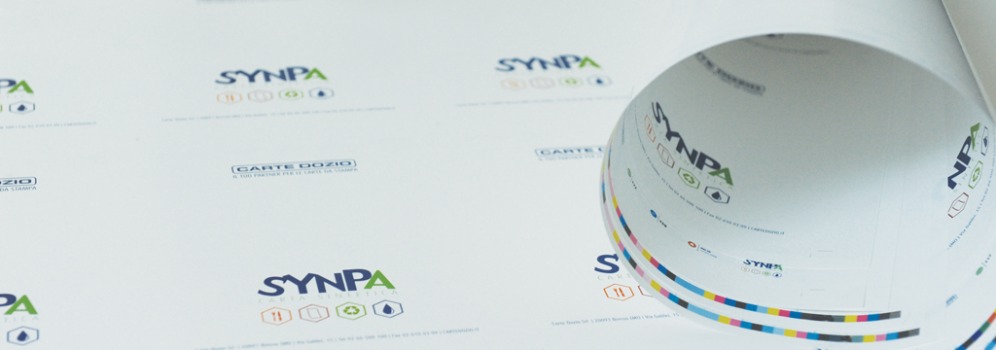
La carta sintetica SYNPA è un prodotto altamente innovativo. Sostituisce brillantemente la tradizionale carta di cellulosa nelle più svariate applicazioni.
SYNPA ha una superficie soffice e naturale, sia al tatto sia alla vista. È a prova di intemperie, resiste ai raggi UV, all’umidità e all’acqua. Resiste molto bene agli strappi e alla maggior parte degli agenti chimici e agli oli.
SYNPA è altamente flessibile: non si screpola, né si stropiccia facilmente.
SYNPA è adatta alle più diffuse tecniche di stampa: offset, lito, flexo, roto, serigrafia, ecc…
SYNPA è utilizzabile in tutte le operazioni di taglio, fustellatura, incollatura (trattamento hot melt), piegatura e rilegatura.
SYNPA è atossica e totalmente riciclabile.
Adatta a moltissimi usi, SYNPA è perfetta per realizzare dépliant, pieghevoli, manifesti, cartine e mappe, etichette, libri, ecc…Per avere ottimi risultati di stampa si consiglia di utilizzare inchiostri ad alto potere essicativo (ossidativi).
SYNPA è stampabile anche con macchine digitali professionali.
Caratteristiche tecniche
Altezza bobine: mm 1000
Formato foglio standard: 70×100 cm
Grade disponibili: Sph da 80 micron a 200 micron – Spc 250/350 micron
Dettagli

Articolo Grammatura SPH 80µ 68,8 g/m² SPH 100µ 83 g/m² SPH 120µ 92,4 g/m² SPH 150µ 117,0 g/m² SPH 180µ 135,0 g/m² SPH 200µ 140,0 g/m² SPC 250µ 279,0 g/m² SPC 350µ 398,0 g/m² stampa e consigli utili
Per ottenere i migliori risultati basta seguire alcuni semplici accorgimenti. SYNPA può essere piegata, tagliata, rilegata e metallizzata a caldo.
TAGLIACARTE
Occorre assicurarsi che la stampa sia perfettamente asciutta al momento del taglio e le lame ben affilate. Il materiale è comprimibile usare una modesta forza nel pressino.
FUSTELLATURA
Preferire tagli di forma arrotondata ed evitare quelli ad angolo che potrebbero indebolire il materiale.
PERFORATURA, PUNZONATURA, BORDATURA
La precisione del taglio è fondamentale per la resistenza allo strappo. Nella foratura evitare surriscaldamenti che potrebbero saldare tra loro i fogli.
STAMPA OFFSET E LITOGRAFICA
Togliere dall’involucro protettivo il materiale appena prima di iniziare la stampa. È importante mantenere il prodotto in piano evitando pieghe e solchi. L’umidità relativa ideale dell’ambiente di stampa è attorno al 50/60 %. In caso di umidità inferiore potrebbe generarsi elettricità statica. Per evitare fenomeni di controstampa si possono adottare sistemi integrati di rimozione del colore (ICR) o di sostituzione della componente grigia (GCR) nel processo di separazione dei colori, riducendo il consumo di inchiostro. In alimentazione occorre un soffio d’aria più potente almeno del 10% rispetto a quello tradizionale.
SOLUZIONE DI BAGNATURA
La bagnatura va mantenuta al minimo per permettere un rapido asciugamento; ciò è dovuto al minor assorbimento rispetto alle carte tradizionali. Un eccesso di acqua sulla lastra può ridurre la concentrazione dell’inchiostro allungando i tempi di essiccazione. Il PH va mantenuto intorno a 5-6 e la temperatura della soluzione a circa 15 °C. È consigliabile ridurre gli additivi del 50 % e non usare additivi con lubrificanti o additivi sostitutivi dell’alcool che rallentano l’asciugamento. Per le bagnature all’alcool si suggerisce una bagnatura al 10 % di alcool isopropilico.
STAMPA SERIGRAFICA SYNPA è l’ideale per l’uso con trattamento UV. Si possono usare tutti i comuni inchiostri serigrafici, ma l’inchiostro vinilico tende a non asciugare perfettamente. Attenzione alle temperature di essiccazione; se troppo elevate possono deformare i fogli.
